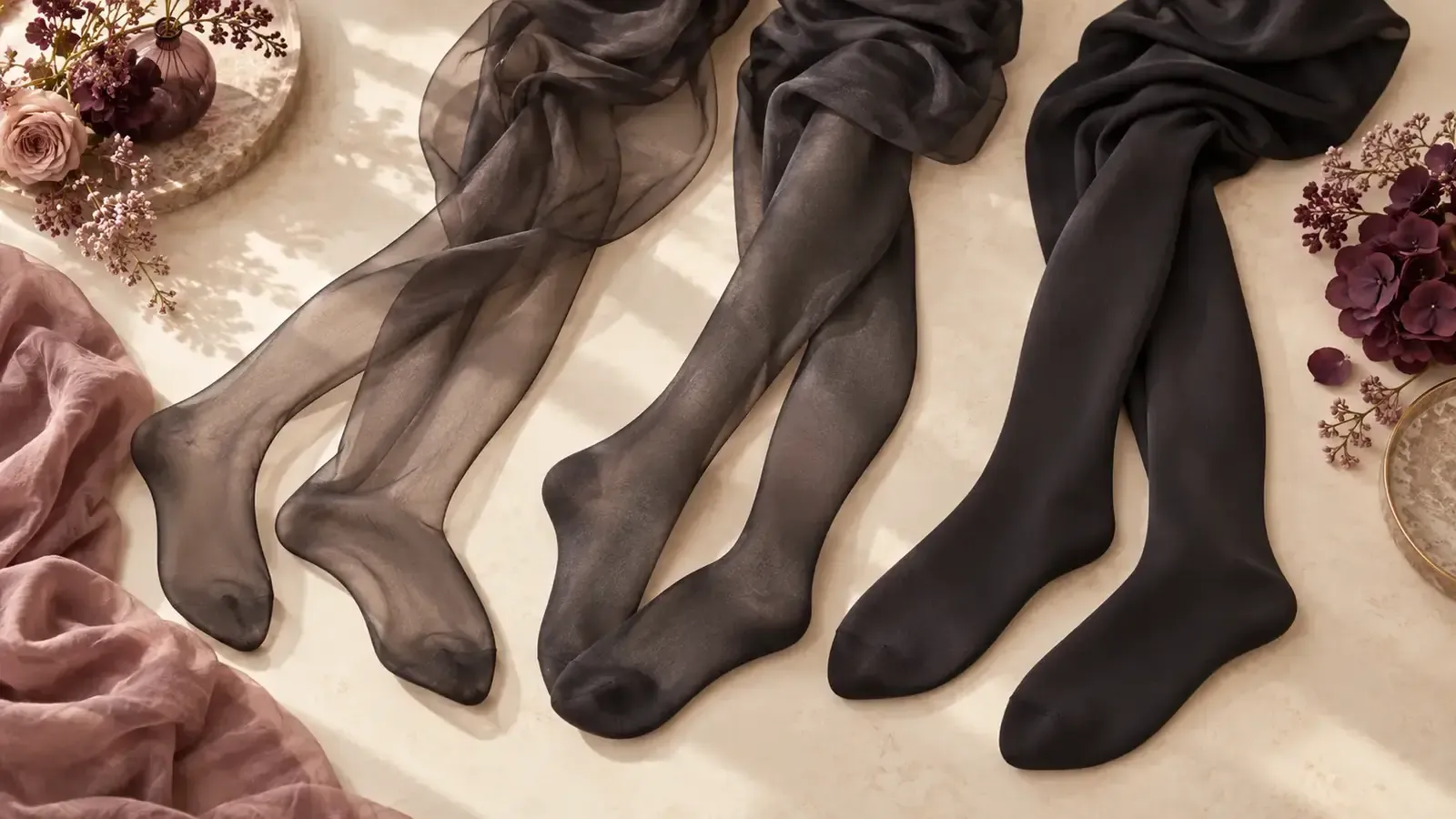
Tights vs Stockings: What's the Difference?
Both cover the leg, but they work in quite different ways. A clear look at the practical differences between tights and stockings.
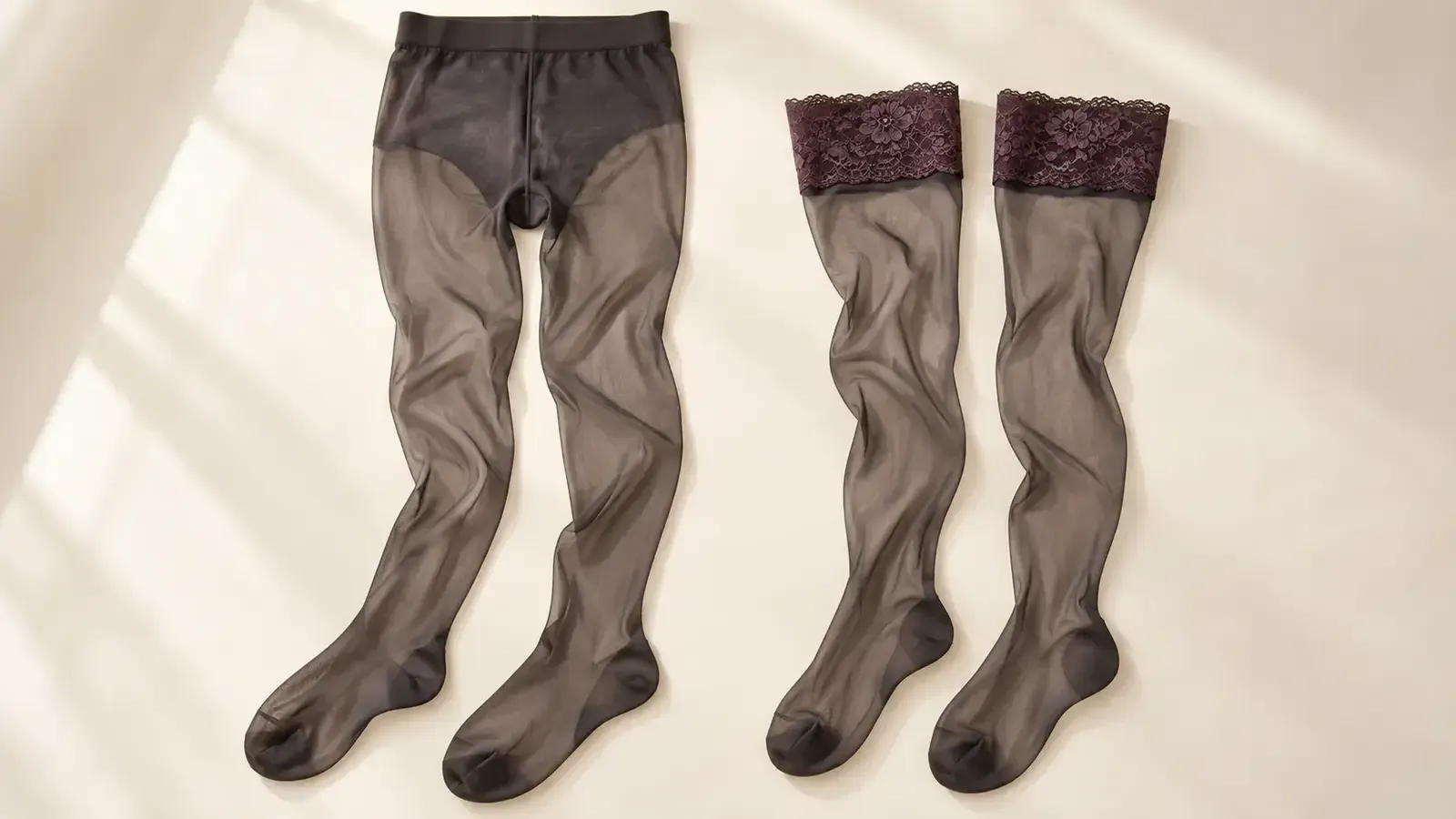
At a glance, tights and stockings do the same job: they cover the leg. In practice they are constructed differently, held up differently and suit different occasions. Understanding that one structural difference makes the rest easy to reason about.
In short: tights are a single garment held at the waist; stockings are two separate garments held at the thigh, either by a suspender belt or by a silicone band. Everything else follows from that.
The core difference
- Tights are one piece. The legs are joined by a panty section, so the whole garment is anchored at the waist.
- Stockings are separate for each leg. They reach to the thigh and are held up by a suspender belt, or — in the case of hold-ups — by a wide band lined with silicone.
That single difference in construction explains almost everything else, from how they feel to how and when you would choose one over the other.
How each stays up
Tights rely on the waistband and the natural stretch of the knit to stay in place. Because they are anchored at the waist, they tend to feel secure with very little adjustment — which is why they are the default choice for most people on most days.
Stockings rely on something else entirely. A traditional stocking is clipped to a suspender belt: typically four to six straps with small fasteners that grip the stocking top. Hold-ups skip the belt and use a silicone band to grip the skin directly.
Each has trade-offs. A belt gives a very secure, adjustable hold and a classic look, but it takes a moment to put on. A silicone band is quicker, but relies on clean, dry skin and a well-fitting band to stay put. We look at this more closely in our beginner’s guide to hold-ups.
Comfort and practicality
| Consideration | Tights | Stockings |
|---|---|---|
| Ease of wearing | Simple, one piece | Needs a belt or band |
| How it stays up | Waistband and knit stretch | Suspender belt or silicone band |
| Warmth | Often warmer | Depends on thickness and fibre |
| Toilet breaks | Less convenient | Often more convenient |
| Layering | Sits neatly under clothes | Can show at the thigh |
| Feel | A defined waistband | Lighter, with no waistband |
| Typical occasion | Everyday, work, winter | Dressing up, vintage, occasion |
Neither is objectively better. The right choice depends on the outfit, the weather and how you like to feel.
Which should you choose?
Choose tights when you want simplicity, warmth or uninterrupted coverage — under tailoring for work, with boots in winter, or whenever you would rather not think about your hosiery again until the end of the day.
Choose stockings when you want a more traditional look, when a suspender belt suits the outfit, or when you simply prefer the lighter feel of no waistband under a dress.
If your priority is warmth, bear in mind that the fibre and denier of a pair matter more than whether it is tights or stockings. Our guide to choosing a denier explains how to read the numbers.
Trying both
If you are new to stockings, a set of hold-ups is the gentlest introduction. There is no belt to master, and they behave a little more like tights while still being separate garments. Start with a mid-thigh length and a mid-range denier, and save very sheer stockings for when you are confident with the technique.
A quick word on fit and care
Both tights and stockings last longer when they fit well. Sizing is based on height and weight rather than dress size, so check the brand’s own chart — our hosiery sizing guide walks through how to do it. Whatever you choose, cool water and gentle handling will protect the knit and the elastane, as covered in how to wash tights.
Frequently asked questions
Can stockings stay up without a suspender belt?
Only if they are hold-ups, which have a silicone-lined band at the top. Traditional stockings need a belt, clips or garters to stay in place.
Are stockings warmer than tights?
Usually not, because tights cover the whole pelvis and add an extra layer of knit. A thicker stocking can be warm, but tights generally trap more heat. For cold weather, look for a high denier and a warmth-friendly fibre in either style.
Are stockings harder to wear?
They take a little more time and technique, but they are not difficult once you have the routine. Hold-ups are the easiest starting point; suspender belts become second nature after a few wears.
Do you wear anything under tights or stockings?
No. Hosiery is worn directly against the skin. Wearing underwear underneath can create lines and may cause tights or stockings to slip.
The short version
Tights are joined and held at the waist; stockings are separate and held at the thigh. Start with whatever feels comfortable, then let the outfit and the occasion guide the rest. Browse more in Stockings or Tights.