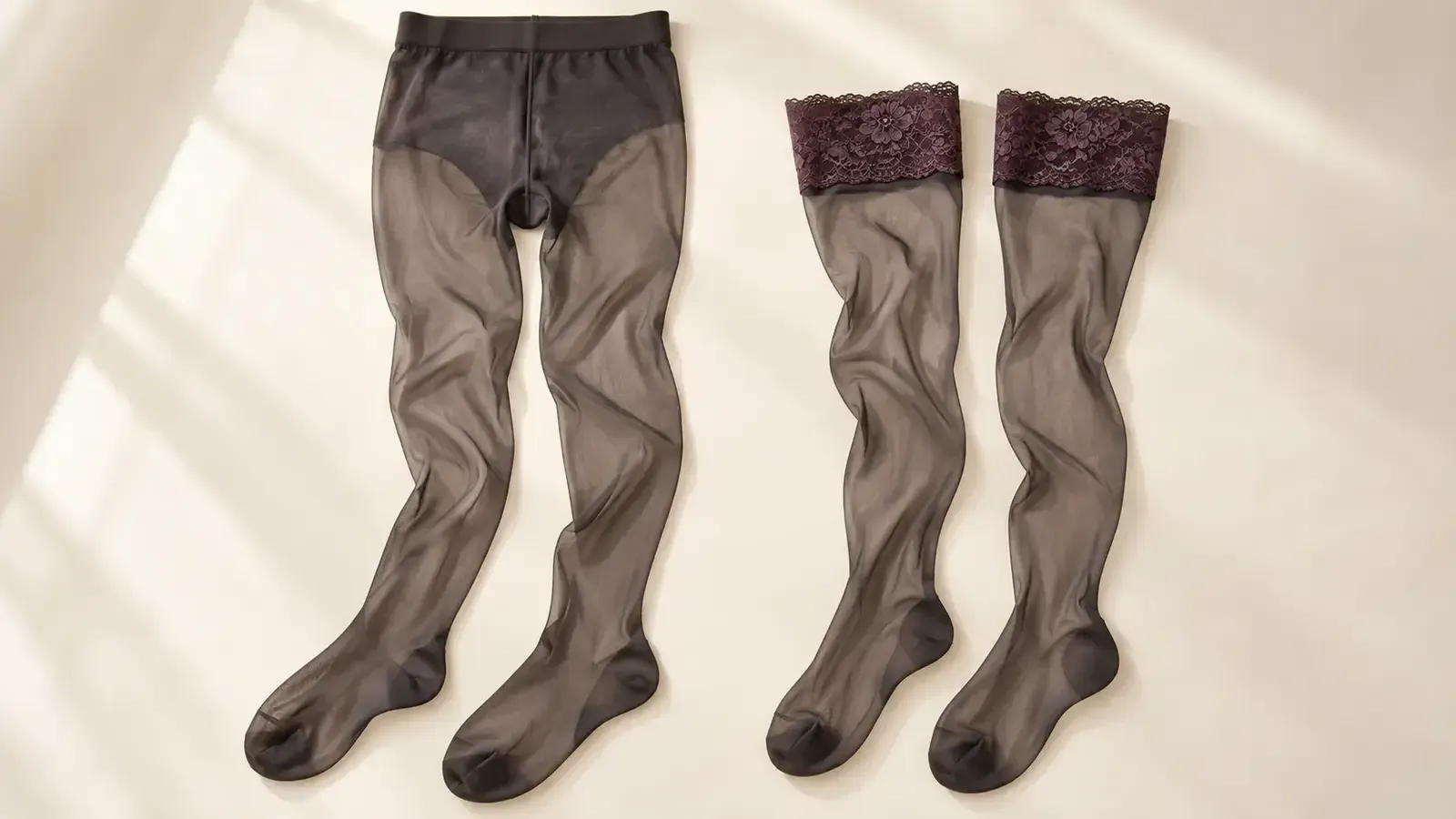
Leggings vs Tights: When to Wear Which
They can look almost identical on a hanger. Here is how leggings and tights differ, and how to choose between them.
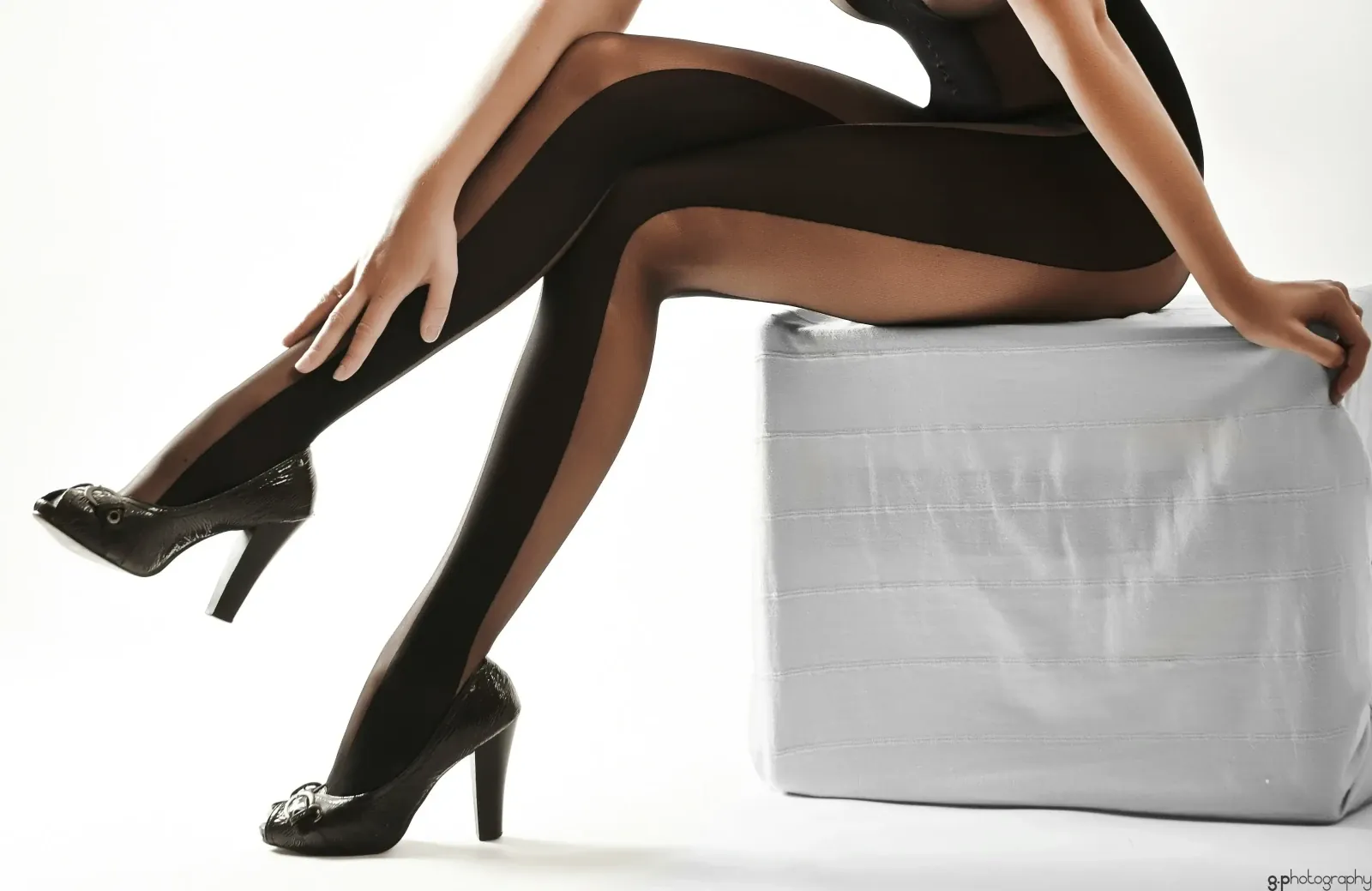
Leggings and opaque tights can look nearly the same, especially in black. The difference is in how they are made and what they are designed to do — and once you know that, choosing between them becomes obvious.
In short: tights are fine hosiery worn with a skirt, dress or shorts; leggings are heavier casual bottoms worn in their own right. If the garment is meant to be seen on its own, it is a legging.
The practical differences
- Tights are hosiery: a fine, close-fitting knit joined by a panty section, sized by height and weight and measured in denier. They are designed to finish a look, not to be the look.
- Leggings are casual wear: a heavier fabric, usually with a proper waistband and often with seams, pockets or a shaped gusset. They are designed to be worn as the bottom half of an outfit.
| Feature | Tights | Leggings |
|---|---|---|
| Fabric | Fine knit, measured in denier | Heavier jersey, cotton or ponte |
| Construction | Joined legs and panty | Two legs joined at a waistband |
| Sizing | Height and weight | Clothing size |
| Opacity | Sheer to opaque | Fully opaque by design |
| Worn as | Under a skirt or dress | The bottom half of an outfit |
| Typical use | Work, occasion, layering | Casual, lounging, exercise |
How each is worn
Tights are an under layer. They sit beneath a skirt, dress or shorts, adding colour, coverage or warmth, and they are usually removed before you get undressed. Leggings are an outer layer: you wear them with a top, a tunic or a long shirt, and they are meant to be visible.
That single distinction settles most of the confusion. If you would feel underdressed wearing the garment on its own, it is probably tights.
Opacity and coverage
Opaque tights generally stay opaque when stretched, and leggings do too because they are built from heavier fabric. But not all leggings are suitable as trousers, and not all tights are as opaque as the packet suggests. The reliable test is the stretch test:
Stretch the fabric across your thigh or knee. If you can see your hand, or a blurred outline of it, through the fabric, it is not opaque enough to wear as a standalone bottom.
For tights, this is exactly why a mid-black opaque at 80 denier reads as solid while a pale 40 denier does not. Our guide to denier explains the difference, and sheer vs opaque tights shows the spectrum in practice.
When to choose leggings
- For lounging, errands, travel or the gym.
- When you want comfort and coverage without a dress or skirt.
- In cold weather, under a longer top or tunic, or layered beneath trousers.
- When you want pockets, a structured waistband or a more casual silhouette.
When to choose tights
- Under a skirt, dress or shorts.
- When you want a smooth, fine finish rather than a visible fabric.
- For smarter or more formal outfits, and for work.
- When you need warmth without bulk — see the best tights for winter.
Can you wear tights as leggings?
It is best not to. Tights are thinner, more transparent and far less durable than leggings, and they are cut to sit under clothing rather than to be worn as trousers. For the same reason, leggings are a poor substitute for tights under a formal dress — the fabric is too heavy and the seams show.
The two are at their best when used for what they were designed for.
Layering for warmth
In cold weather, some people wear tights under leggings for extra insulation. It works well as long as the outer layer is not so tight that it strains or restricts movement. Choose a fine, smooth pair of tights to layer under, and keep both layers close in colour so nothing shows through. Our winter tights guide covers layering in more detail.
Choosing good leggings
Not all leggings are equal. A well-made pair will:
- Be fully opaque even when stretched, so it passes the hand test.
- Have a proper gusset for comfort and to avoid strain.
- Use flatlock or smooth seams that do not dig in.
- Hold their shape rather than sagging at the knee after a few wears.
- Have a substantial fabric weight — heavier jersey or ponte hangs better than thin, shiny knits.
Ponte fabric is more structured and holds its shape; cotton jersey is softer and more casual. High-shine “disco” leggings are best kept for evenings and styled as a deliberate statement rather than as everyday trousers.
Frequently asked questions
Are leggings and tights the same?
No. Tights are fine hosiery worn under a skirt or dress; leggings are heavier casual bottoms worn as trousers. They differ in fabric, construction and purpose.
Can I wear leggings instead of trousers?
Yes, if they are opaque and you style them as a bottom half with a longer top or tunic. The hand test above is the reliable check.
Are leggings warmer than tights?
Usually, because the fabric is heavier. For the coldest days, thermal tights or leggings worn over tights can be warmer still.
Can you wear leggings in summer?
Lightweight, breathable leggings can work in warm weather, but tights or bare legs are often more comfortable. Choose a lighter fabric and an ankle length if you do.
The short version
Tights are hosiery for finishing an outfit; leggings are casual bottoms in their own right. When in doubt, ask whether the garment is meant to be seen on its own — the answer usually settles it. Browse more in Leggings or Tights.