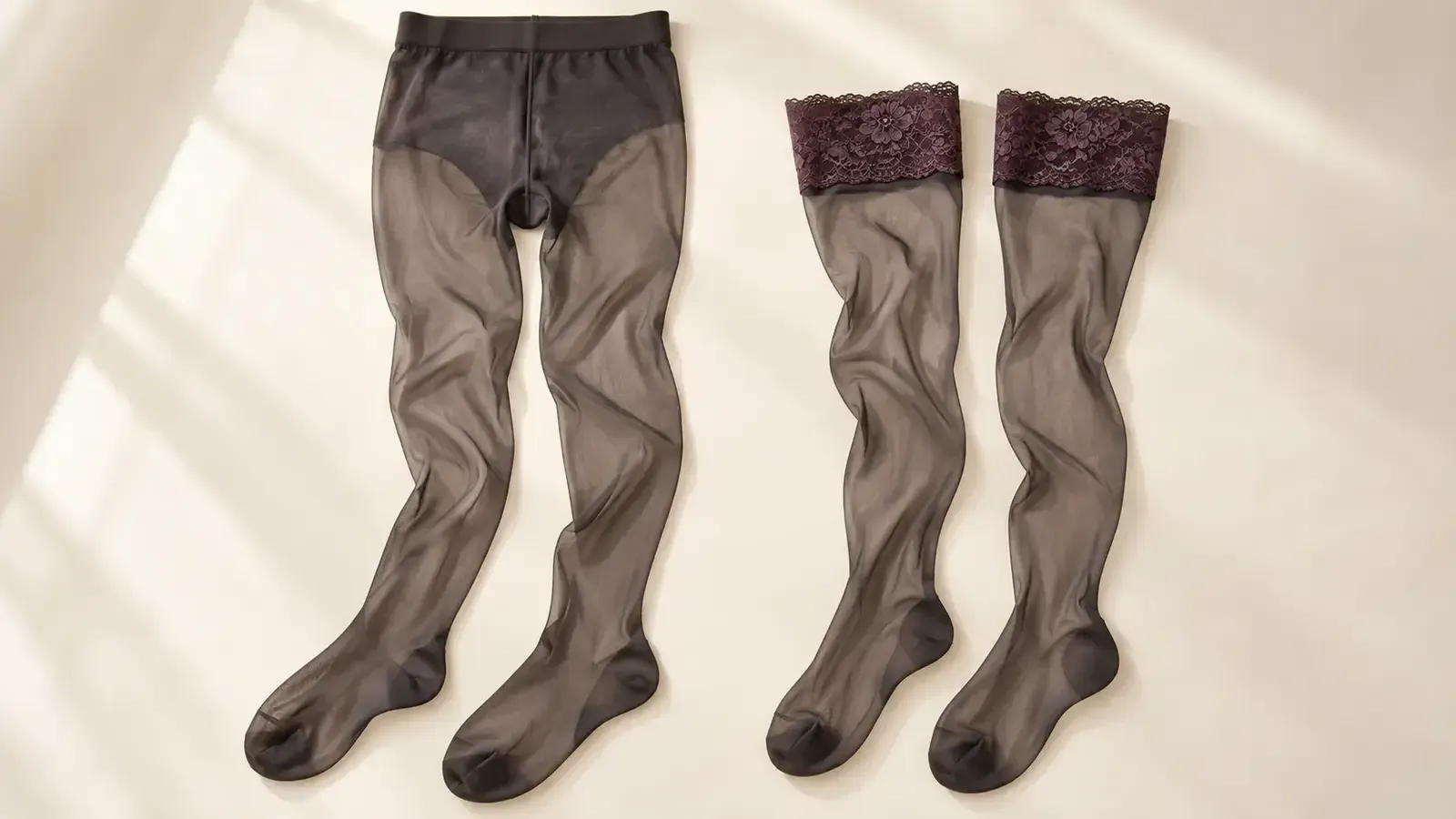
What Does Denier Mean in Tights?
The number on a pair of tights tells you more than you might think. Here is what denier means, and how to use it when you are choosing.
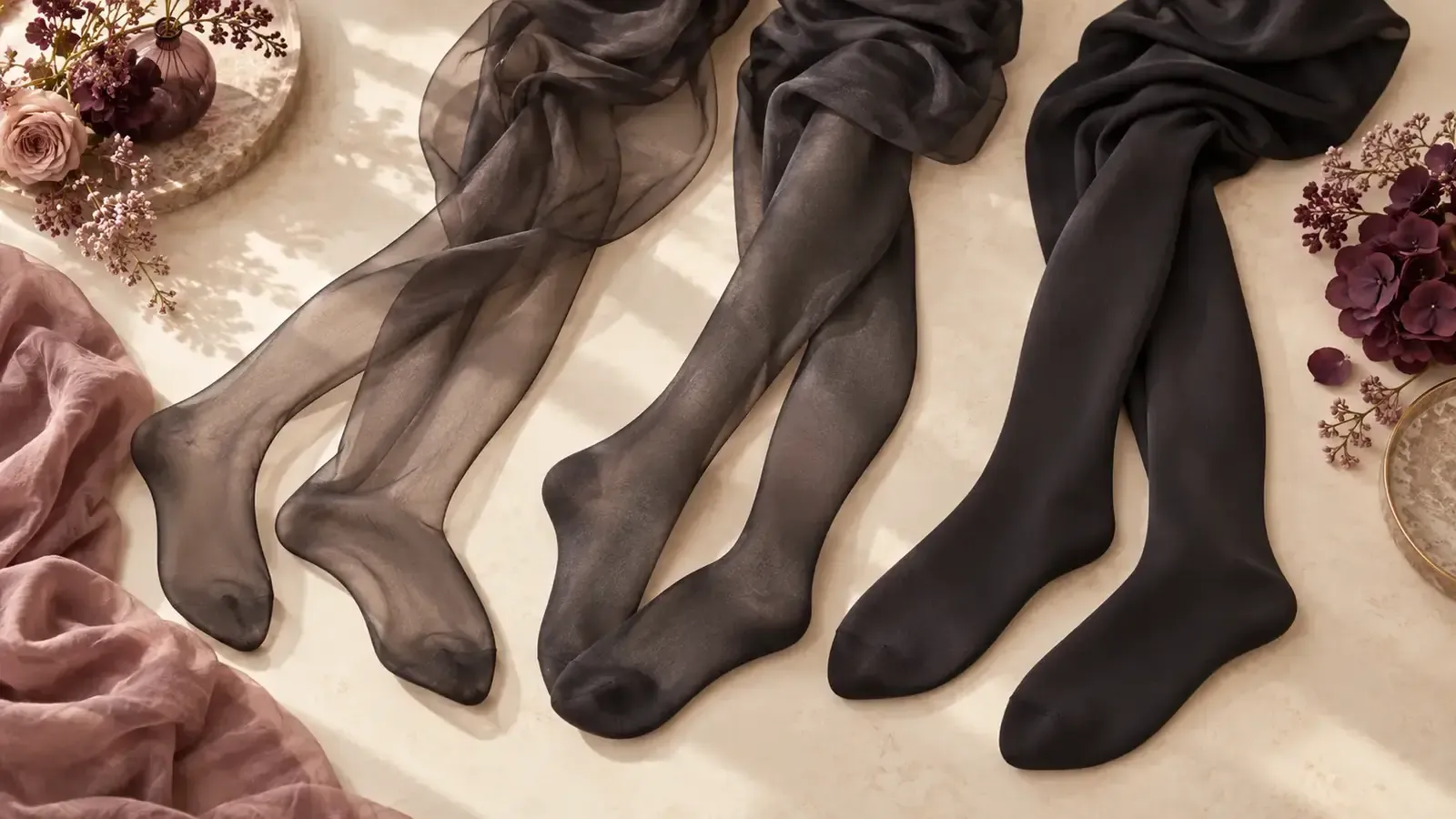
Denier is one of those small numbers with an outsized effect on how tights look and feel. It tells you how thick the yarn is, which in turn shapes how sheer, opaque and warm a pair will be. Once you understand it, choosing tights becomes far less of a guessing game.
In short: denier measures the thickness of the yarn. Lower numbers are sheerer; higher numbers are more opaque and generally warmer. Treat it as a starting point, then look at colour and fibre before you decide.
What denier actually measures
Denier is a measure of the thickness of the yarn used to knit hosiery. Technically, it describes the linear density of a fibre: the mass in grams of 9,000 metres of it. A higher number means a thicker, heavier yarn.
For tights, that translates into three things you can see and feel straight away:
- Sheerness — how much of the leg shows through.
- Coverage — how much colour and line the tights add.
- Weight — how substantial they feel in the hand and on the leg.
It is worth remembering that denier is measured per yarn, not per garment. A pair can be knitted from one or more yarns, and the tightness of the knit varies between brands. That is why two pairs both marked 40 denier do not always look identical.
A quick denier reference
| Denier | Look | Where it works best |
|---|---|---|
| 8–15 | Very sheer | Warm weather, evening, polished workwear |
| 15–20 | Sheer | Everyday smart, spring and summer |
| 20–30 | Sheer to semi-sheer | The most versatile everyday range |
| 30–40 | Semi-sheer | Transitional weather, a little more coverage |
| 40–60 | Semi-opaque | Spring and autumn, daytime |
| 60–80 | Opaque | Cooler days, full coverage |
| 80–100 | Heavy opaque | Winter, structured looks |
| 100+ | Thermal or fleece-lined | Deep winter warmth |
The boundaries overlap and every brand draws them slightly differently, so treat these ranges as a guide rather than a rule.
Denier, opacity and warmth are not the same thing
These three qualities are related, but they are not interchangeable — and mixing them up is the most common reason people are disappointed with a pair.
Opacity describes how much light passes through the fabric. Denier influences it, but colour matters just as much: black tights at 40 denier read far more opaque than a pale shade at the same number. A matte finish also looks denser than a glossy one.
Warmth depends on the fibre and the construction rather than the denier alone. A cotton-rich 60 denier and a plain synthetic 60 denier will not feel the same on a cold morning. If warmth is your priority, look for words such as thermal, brushed, fleece-lined or a wool blend alongside the number. Our guide to the best tights for winter covers this in more detail.
Durability is more subtle still. A thicker yarn is generally more robust, but most damage comes from snags, friction and handling rather than from the yarn snapping. The elastane content — the stretch — has more effect on how well a pair keeps its shape over time.
How denier is written on the packaging
Denier usually appears as a single number followed by “den”, “D” or the word itself: 40 denier, 40D, 40 den. Lower numbers may be described as sheer or ultra-sheer, while the highest numbers are often labelled opaque, thermal or 80 denier and above. Because there is no single standard, it pays to compare the description and a photo rather than the number alone.
Choosing a denier for the occasion
A simple way to think about it:
- Warm weather or evening wear: 8–20 denier for a fine, polished finish.
- Everyday smart: 20–40 denier, the most flexible range for work and weekends.
- Extra coverage: 40–60 denier when you want a solid line without heavy weight.
- Cold days and winter: 70–100 denier and above for full opacity and warmth.
If you are unsure where to begin, a 30 denier and a 60 denier pair will cover most occasions between them. For a fuller comparison of how these look, see sheer vs opaque tights explained.
Frequently asked questions
Is 40 denier opaque?
Not quite. 40 denier usually sits in the semi-opaque range: it gives good coverage, but a strong light behind the leg may still show a faint shadow. In black it reads as nearly opaque; in pale shades it looks considerably sheerer.
Is higher denier warmer?
Often, because a thicker knit traps more air — but the fibre and construction matter more. A brushed or thermal pair at 80 denier will usually beat a plain 100 denier for warmth.
Is a higher denier more durable?
A thicker yarn tends to be more hard-wearing, but the way you wash and handle tights has a bigger impact than the number on the packet. Our guide to washing tights will help you get more wears from any pair.
What denier should I wear to work?
For most workplaces, 15–30 denier gives a polished, professional finish. If you want more coverage or warmth without going fully opaque, 40–60 denier is a safe choice.
The short version
Denier tells you how thick the yarn is. Use it as your starting point, then adjust for colour, fibre and the season. Match the number to the occasion, check the fit with our hosiery sizing guide, and buying tights becomes much simpler.