How to Choose the Right Hosiery Size
Hosiery sizing is based on height and weight rather than shoe size. Here is how to read a chart and get a comfortable fit.
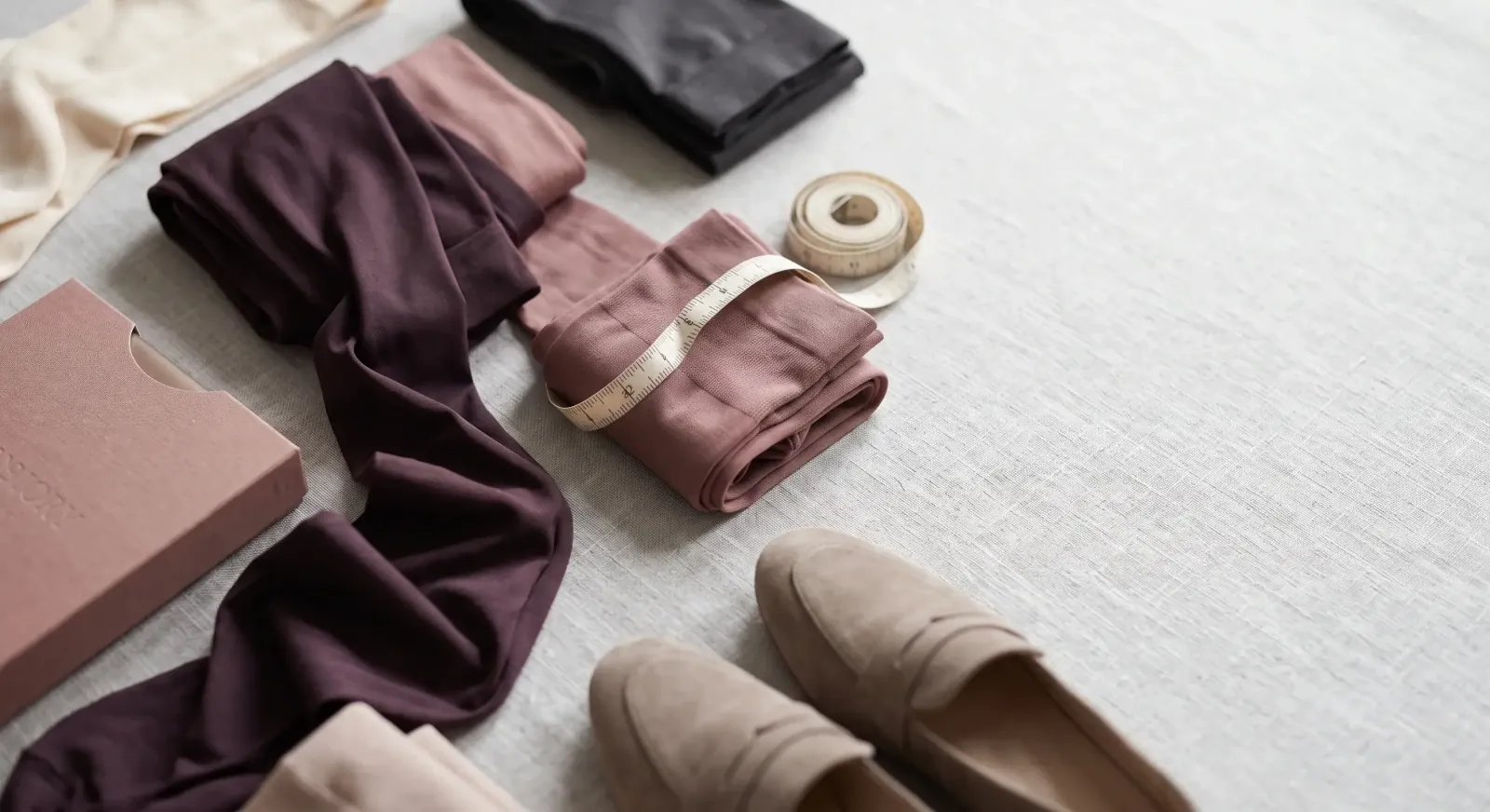
Hosiery sizing surprises people who are used to clothing sizes. Tights are not sold by dress size or shoe size; they are sold by a combination of height and weight. Understanding why makes it much easier to get a comfortable fit the first time.
In short: choose your size using your height and weight, check the brand’s own chart, and size up if you are between sizes. Fit matters more than any single number on the packet.
Why height and weight
Tights have to stretch over the whole leg and stay in place at the waist. The two measurements that predict that best are:
- Height, which sets the length — how far the knit has to reach from waist to toe.
- Weight, which sets the stretch — how far the knit has to expand.
That is why a pair can fit one person perfectly and pull uncomfortably at the waist on someone with the same dress size. Height and weight together describe the job the tights have to do.
What to measure
You only need two things, and you have known both since childhood:
- Your height, measured without shoes.
- Your weight, measured as you normally are.
Then find the brand’s own size chart — on the packet, the website or the product page — and read across from your measurements. If you sit near a boundary, read the next section on sizing up.
Reading a sizing chart
Most charts are a grid of height against weight, with sizes named S, M, L and XL, or with Roman numerals (I, II, III, IV). The chart below is a typical, illustrative example — brands differ, so always use theirs.
| Size | Weight (approx.) | Height (approx.) |
|---|---|---|
| S | 45–60 kg | 150–168 cm |
| M | 55–72 kg | 158–175 cm |
| L | 68–88 kg | 165–182 cm |
| XL | 82–105 kg | 170–190 cm |
The ranges overlap on purpose: tights are knitted to stretch, so there is real tolerance around each size. Notice too that the height band shifts upward as the size increases, because a larger size is also cut longer.
When you are between sizes
If your measurements fall between two sizes, use this simple rule:
- Taller or heavier than average for the range? Choose the larger size.
- Shorter or lighter than average for the range? Choose the smaller size if you prefer a firmer fit.
When in doubt, size up. Tights that are too small pull at the waist, roll down and wear out faster, whereas a slightly larger pair simply sits more comfortably.
How a well-fitting pair should feel
Use this quick fit check the first time you wear a new size:
- The waistband sits at your natural waist without digging in or rolling over.
- The knit lies smooth over the leg, with no pale strain lines or shiny patches.
- The gusset is comfortable when you sit and stand.
- Nothing twists, and there is no excess fabric bunching at the knee or ankle.
If a pair fails two or more of these, the size is wrong rather than the tights themselves.
Special cases worth knowing
- Petite frames: you may need a smaller size for length even if your weight suggests otherwise.
- Tall frames: size up for length; a short pair will pull at the crotch and waist.
- Maternity: dedicated maternity tights have a softer, expandable waistband and are cut to sit over or under the bump. Ordinary tights one size up are a stopgap, not a substitute.
- Extended size ranges: many brands now offer a wider size ladder. Take the time to find yours rather than squeezing into the nearest size.
- Control-top and support styles: these shape the tummy and seat and are sized the same way; they will feel firmer than a standard pair.
- Footless and open-toe styles: still sized by height and weight, but check the leg length carefully.
Common sizing mistakes
- Assuming dress size applies. It does not; height and weight do.
- Using shoe size. Foot size has no bearing on the leg and waist fit.
- Sizing down for a “firmer” feel. This is the most common cause of rolling waistbands and early wear.
- Ignoring height. Two people of the same weight can need different sizes if their heights differ.
- Not checking the brand’s chart. Charts genuinely vary, so a size M from one brand can differ from another.
Frequently asked questions
Is hosiery sizing the same across brands?
No. Brands build their charts around different yarns, stretches and size ranges, so always check the specific chart. A pair that fits in one brand may not in another.
What if I am exactly between two sizes?
Size up for comfort and durability. The only exception is if you are quite short and want a firmer fit — then the smaller size may suit you better for length.
Do opaque tights fit the same as sheer tights?
Broadly yes, because sizing is based on height and weight. Thicker opaque tights can feel a little firmer, but the correct size is the same. See sheer vs opaque tights for how the finish affects the look.
How do I stop tights rolling down at the waist?
Rolling is nearly always a sizing issue: the pair is too small or the waistband is sitting too low. Try a larger size, and make sure the waistband sits at your natural waist rather than your hips. Our denier guide is useful for choosing a suitable weight, and how to wash tights will help the pair keep its shape.
The short version
Measure your height and weight, read the brand’s own chart, and size up when you are in between. Good fit is the difference between tights you forget about and tights you cannot wait to take off.